

Benefits of fermentation includes creating a healthy lactic acid that gives good and tangy flavor & bright color. It keeps our stomachs and bowels at a proper pH. Lactic acid is deadly to pathogens! Fermented foods retain all their original vitamins, especially vitamin C! They contain active enzymes that help with digestion, & they’re so easy to digest that we absorb all the good nutrition with hardly any digestive effort.
Raw fermented foods contain live lactic acid bacteria. It’s probiotics!! The good bacteria lives in our gut and bolsters our microbiome.
Traditional Sauerkraut
Ingredients:
1 small red or green cabbage (about 2lbs)
1 tablespoon fine grind salt (I used pink Himalayan)
1 teaspoon whole spices, such as caraway, dill, or celery seed (optional) -I left out this part.
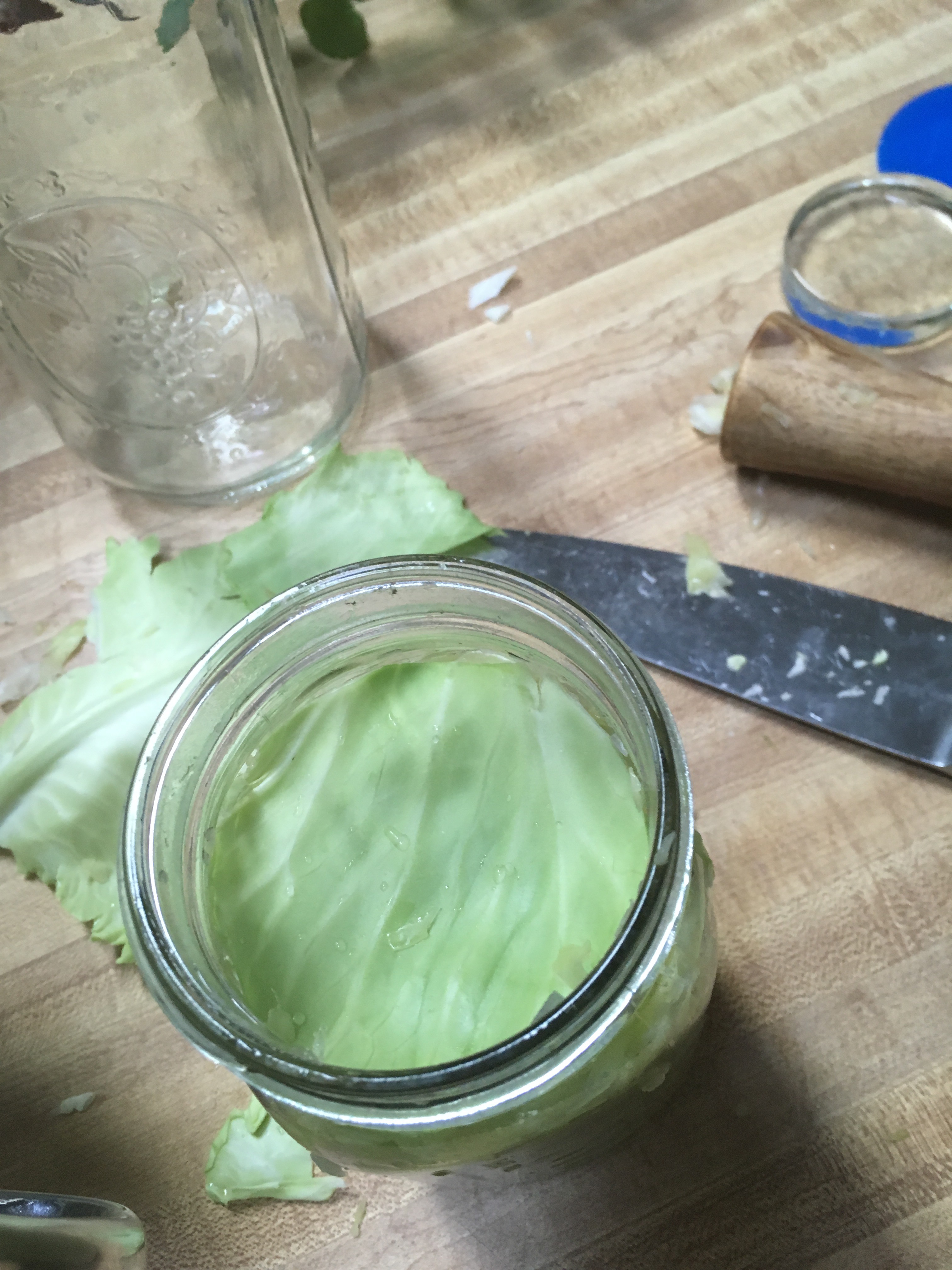
Begin by rinsing your cabbage, then remove and discard any blemished leaves, especially ones with black spots. Next, peel off one whole leave and set it aside.
Place the mason jar upside down over the leaf and cut a round circle that will fit into the top of your mix later.
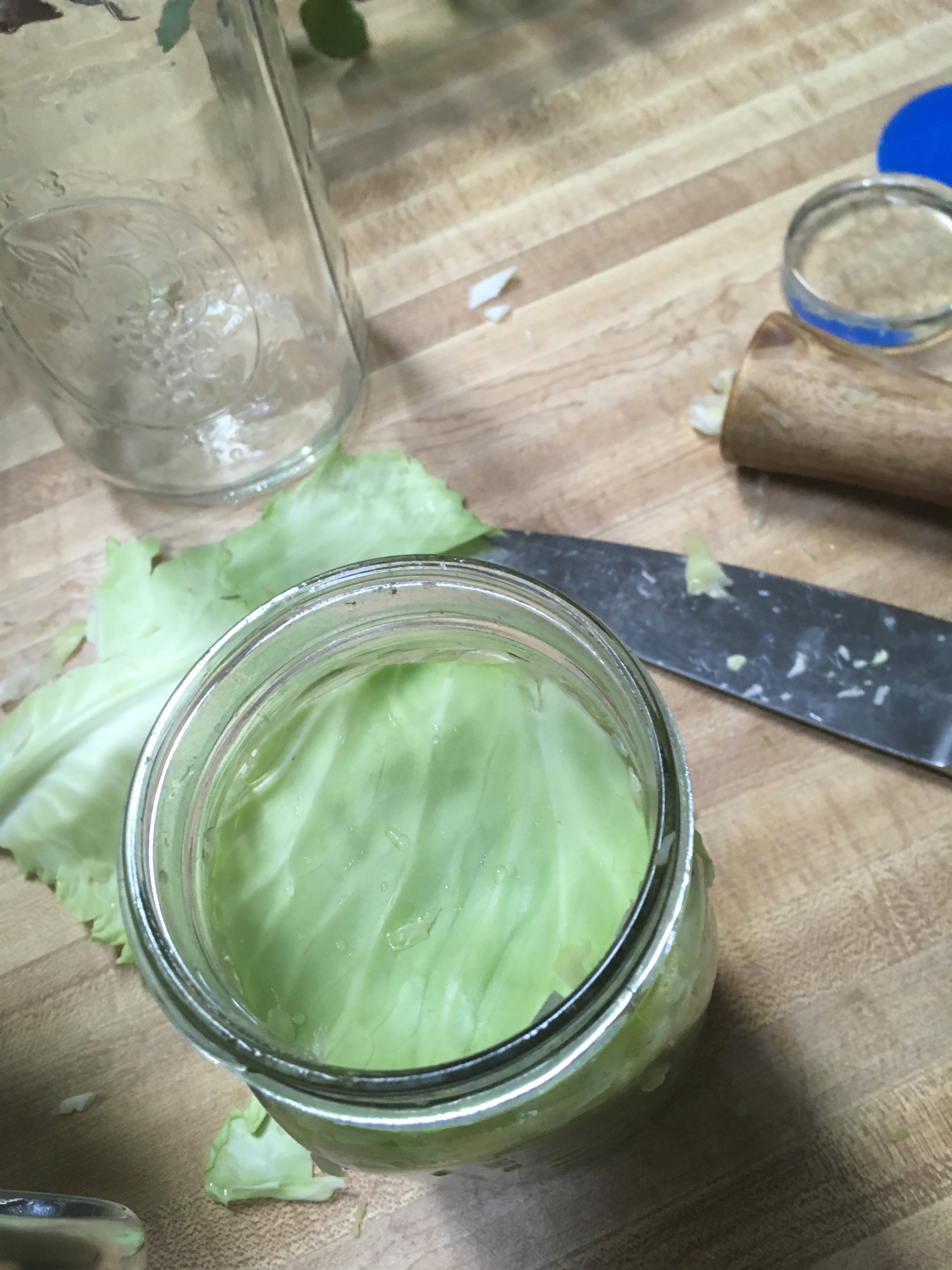

Cut the cabbage from top to bottom, down through the core into 2 halves, and then cut each half again in quarters. Cut out and discard the cores from the cabbage quarters.
Next, Place one wedge of cabbage on your cutting board cut side down, and slice across the green as thin as u can to shred it. I’ve attached a picture from the Internet because I forgot to take pictures here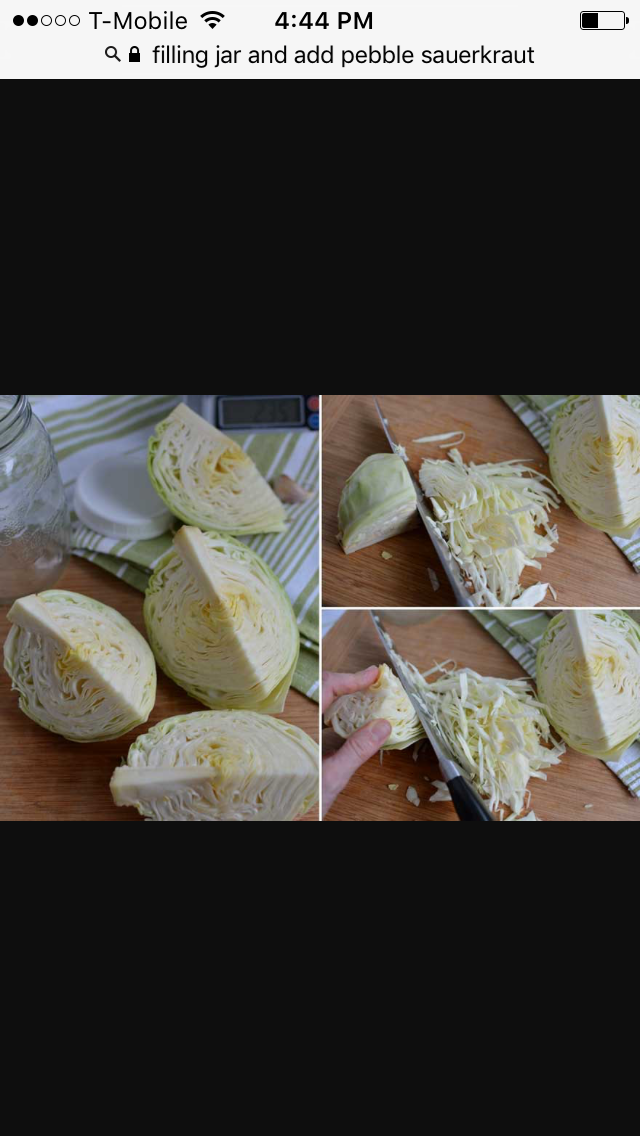
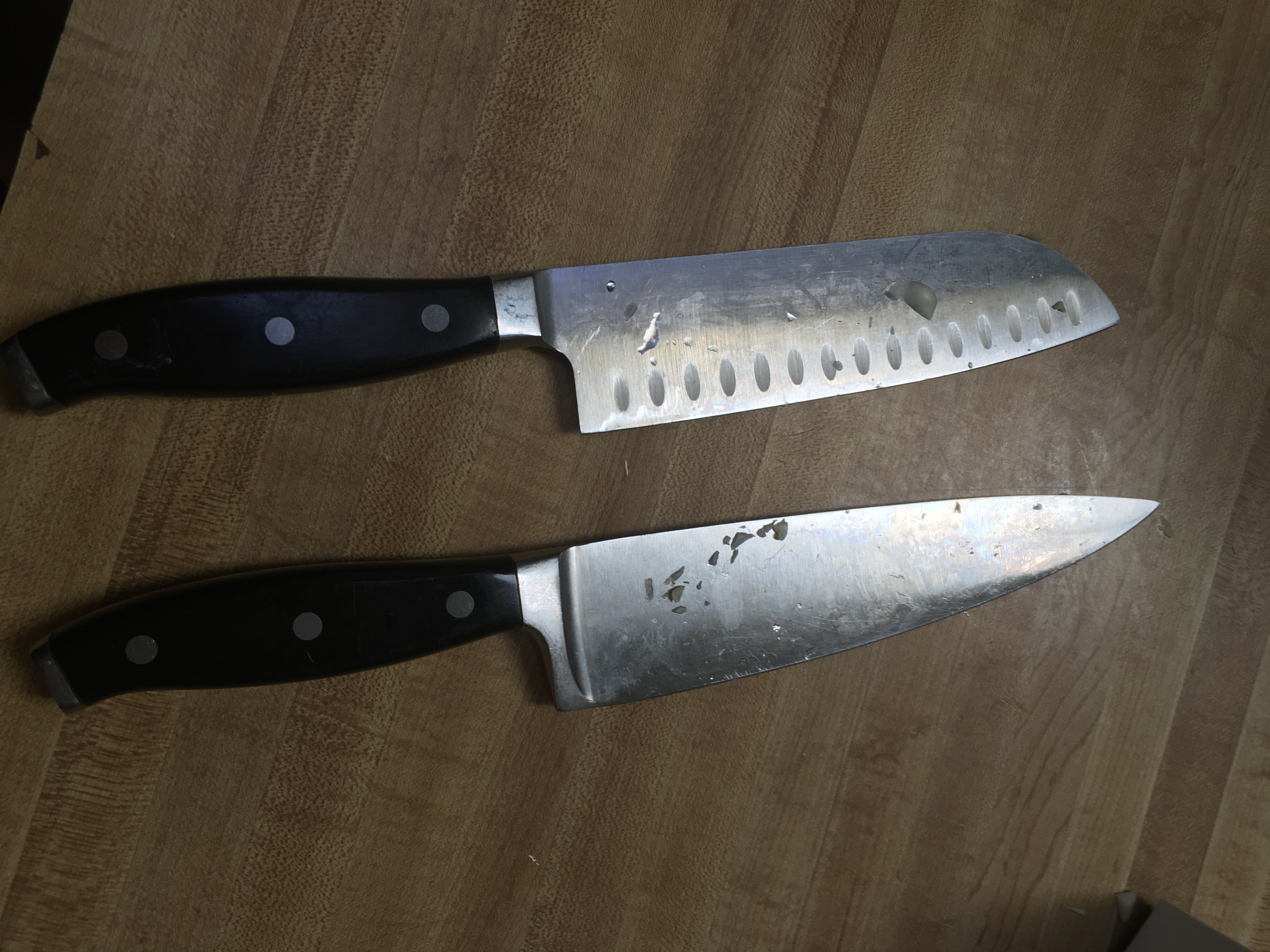
You can use a large knife like the ones I used above. As each quarter is shredded, transfer the cabbage to a large bowl and sprinkle with some of your salt. Keep adding cabbage and salt in layers until you have no more of either one. If you’re using spices, sprinkle them on now.
With your hands or large spoon, toss the cabbage well to incorporate the salt evenly. Squeeze and massage the cabbage to work it in. Next, use the pickle packer to pound the cabbage and begin breaking down the cell walls to release juice. Pounded down flat and then toss it all together and pound it again.
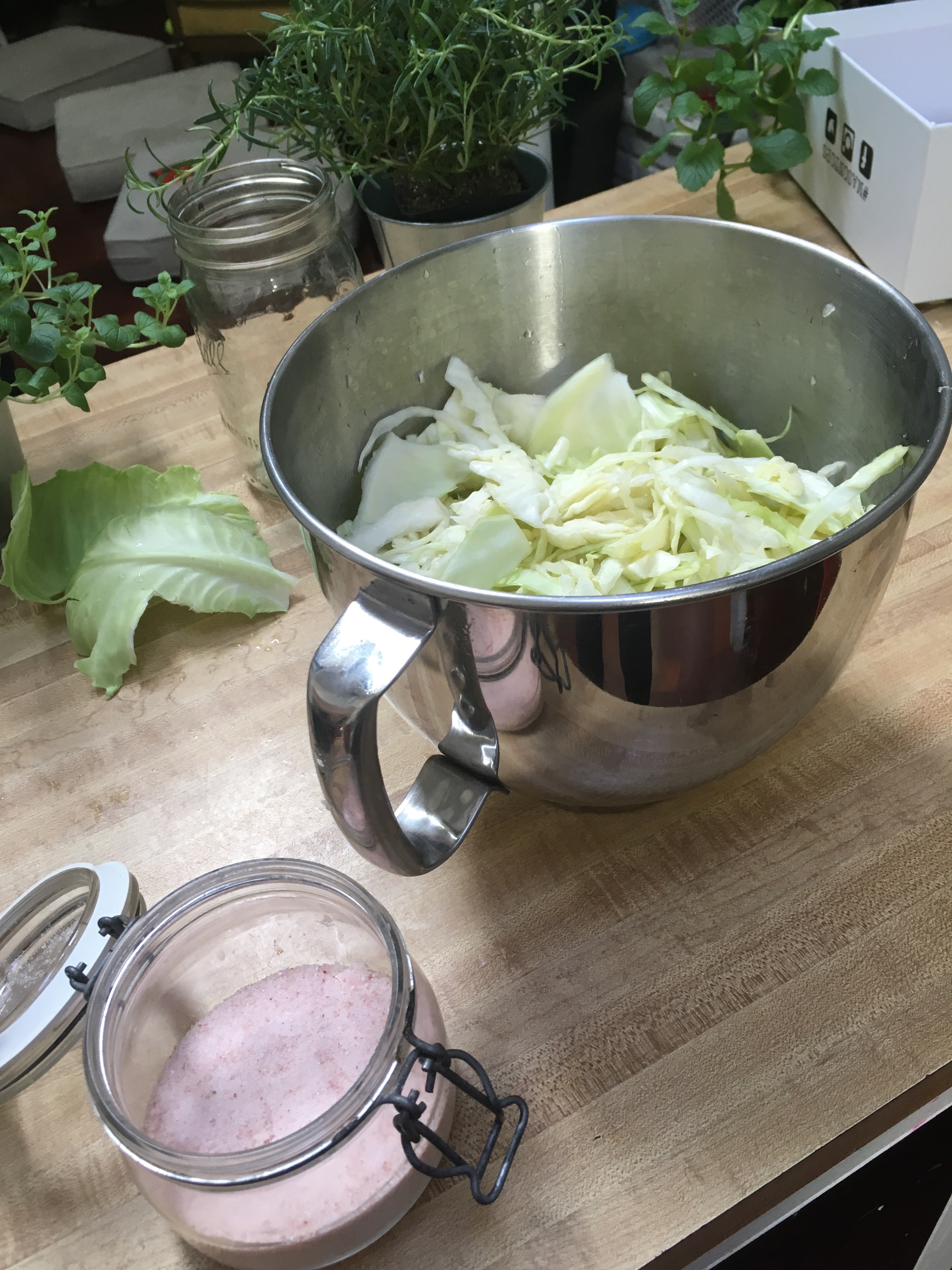
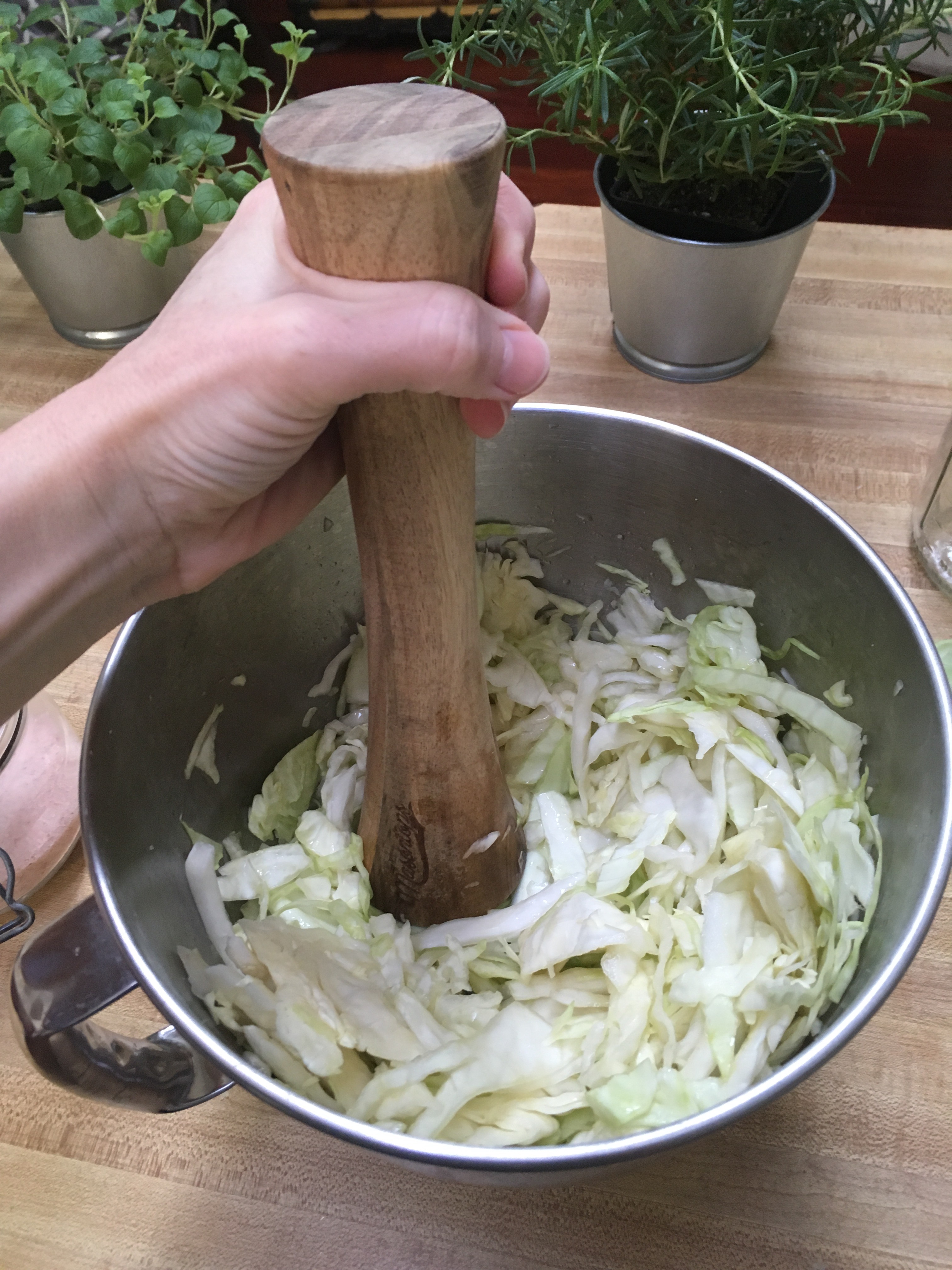
Continue pounding and mixing until the cabbage is juicy and wilted. This can take a couple minutes. If you get tired of pounding place a plate on top of the cabbage and something heavy on top of the plate. Then cover it all with a towel and let sit for a couple hours to macerate.
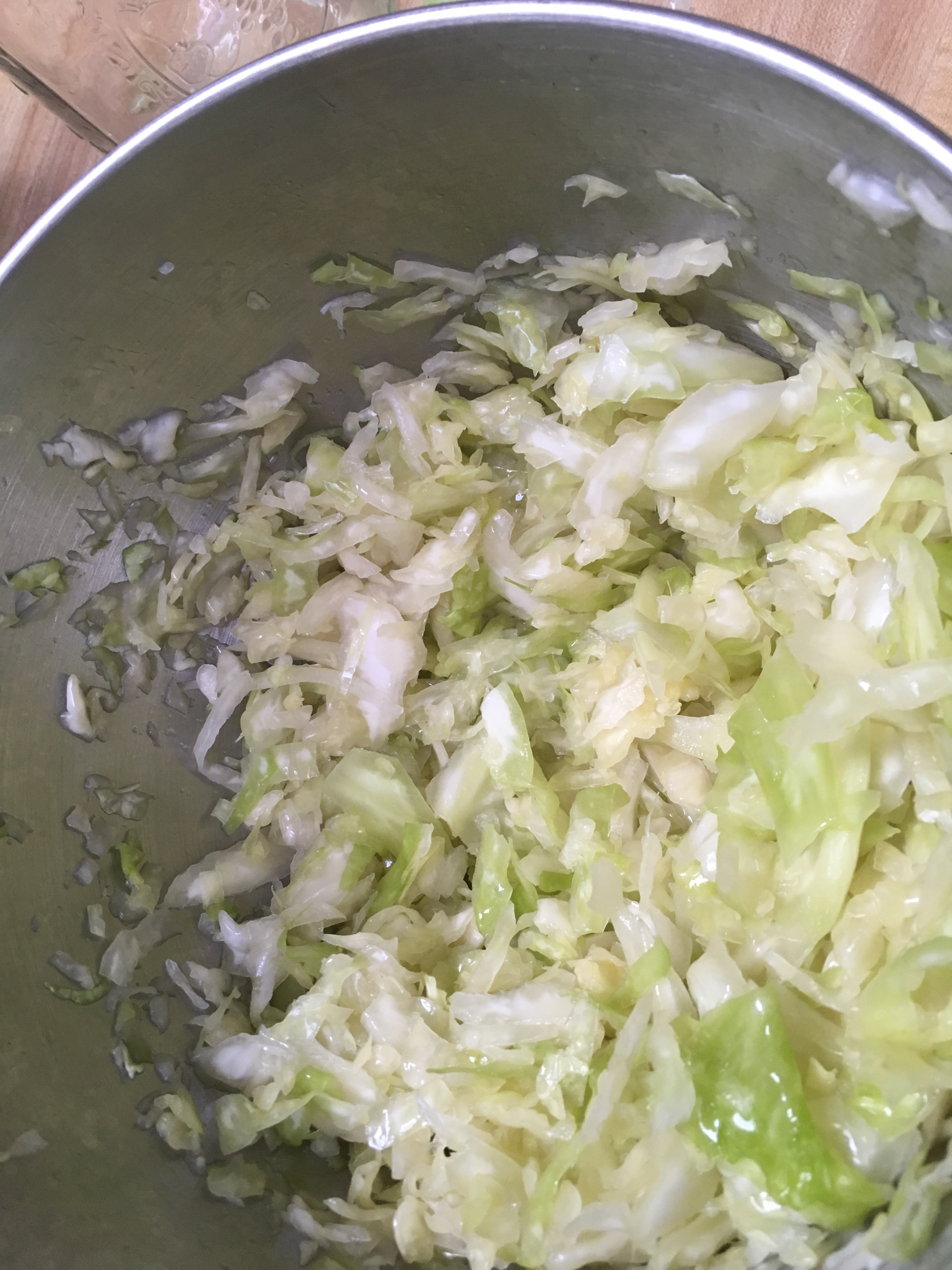
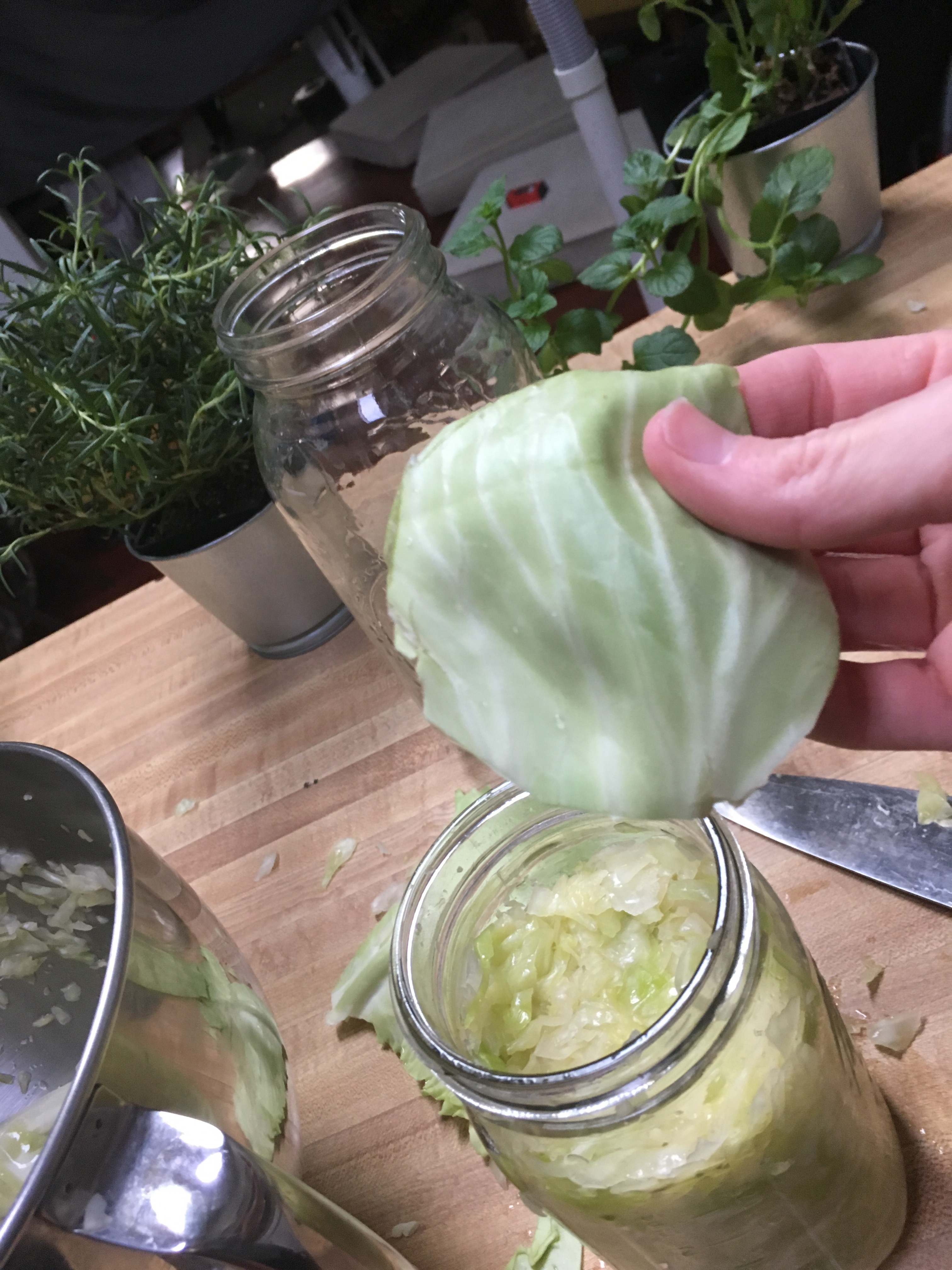
When the cabbage is thoroughly pounded and juicy it’s time to pack your jar. Add a couple handfuls of the cabbage to a 1 quart mason jar and use the pickled packer to pack it firmly down.
As you push the cabbage down, brine will rise up in the jar. Keep adding and packing down cabbage until the jar is filled to the shoulder. Don’t overfill the jar! 2 pounds of cabbage fits pretty perfectly into a 1 quart mason jar. If you find that the jar is full but there are still a few spoonfuls of cabbage toss them with a bit of olive oil for a fresh tasty salad.
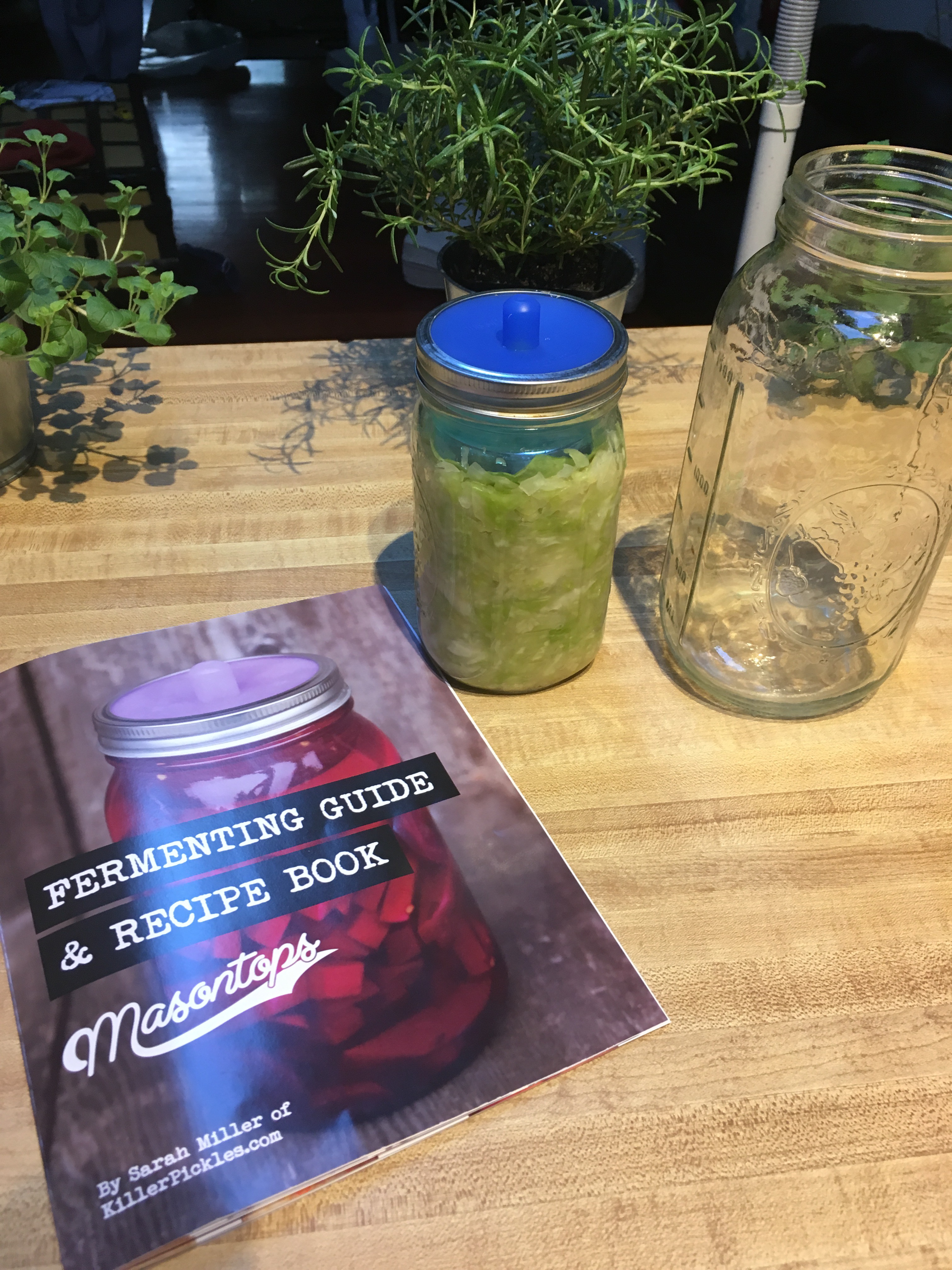
Now take the clean cabbage leaf you reserved and lay it flat on your cutting board place this leave directly on the surface of the sauerkraut to help prevent little bits from floating up. Place a pickle pebble on top of the leaf to keep the cabbage submerged under the brine. Wipe the rim of the jar, then add a pickle pipe and secure the ring. Remember the date by either writing on the side of the jar with a felt tip or on the calendar then set the jar in a dark place to ferment.
At first your kraut may be a little dry if the cabbage was not very fresh. Wait a day or two to see if it releases enough juice to submerge all the cabbage and pickle pebble. If it does not, make a brine of 1/2 teaspoon salt dissolved in 1/2 cup water. Add enough of that so the pickle pebble is completely submerged.
Fermentation should begin within one or two days. As it proceeds you will notice these changes: cabbage swells up so that the brine is almost touching the lid, pocket of gas appear in the cabbage, color changes from bright to drab green, bubbles or foam appear on the surface of the brine, a sulfurous aroma emits from the jar, White sediment in the bottom of the jar.
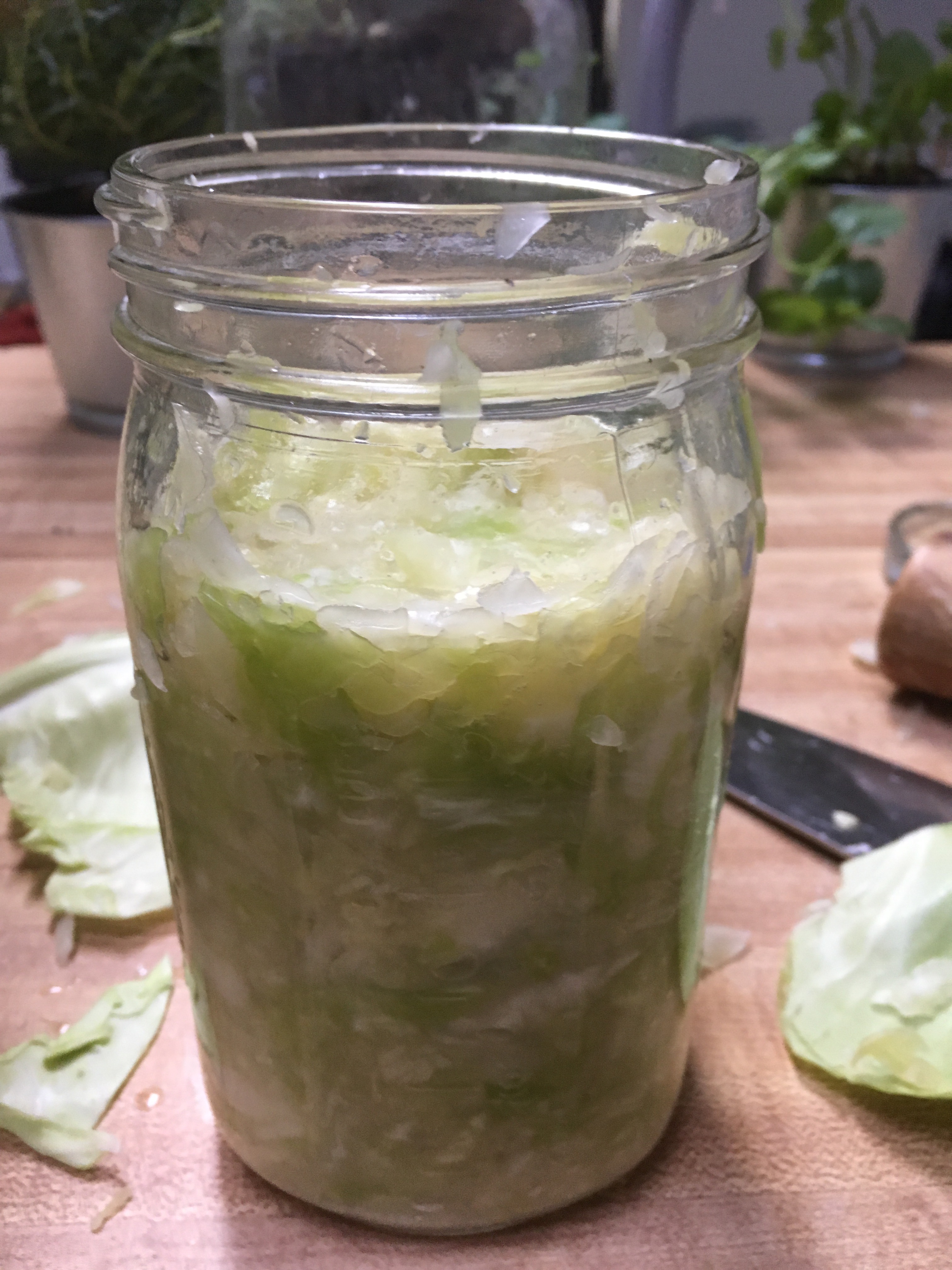
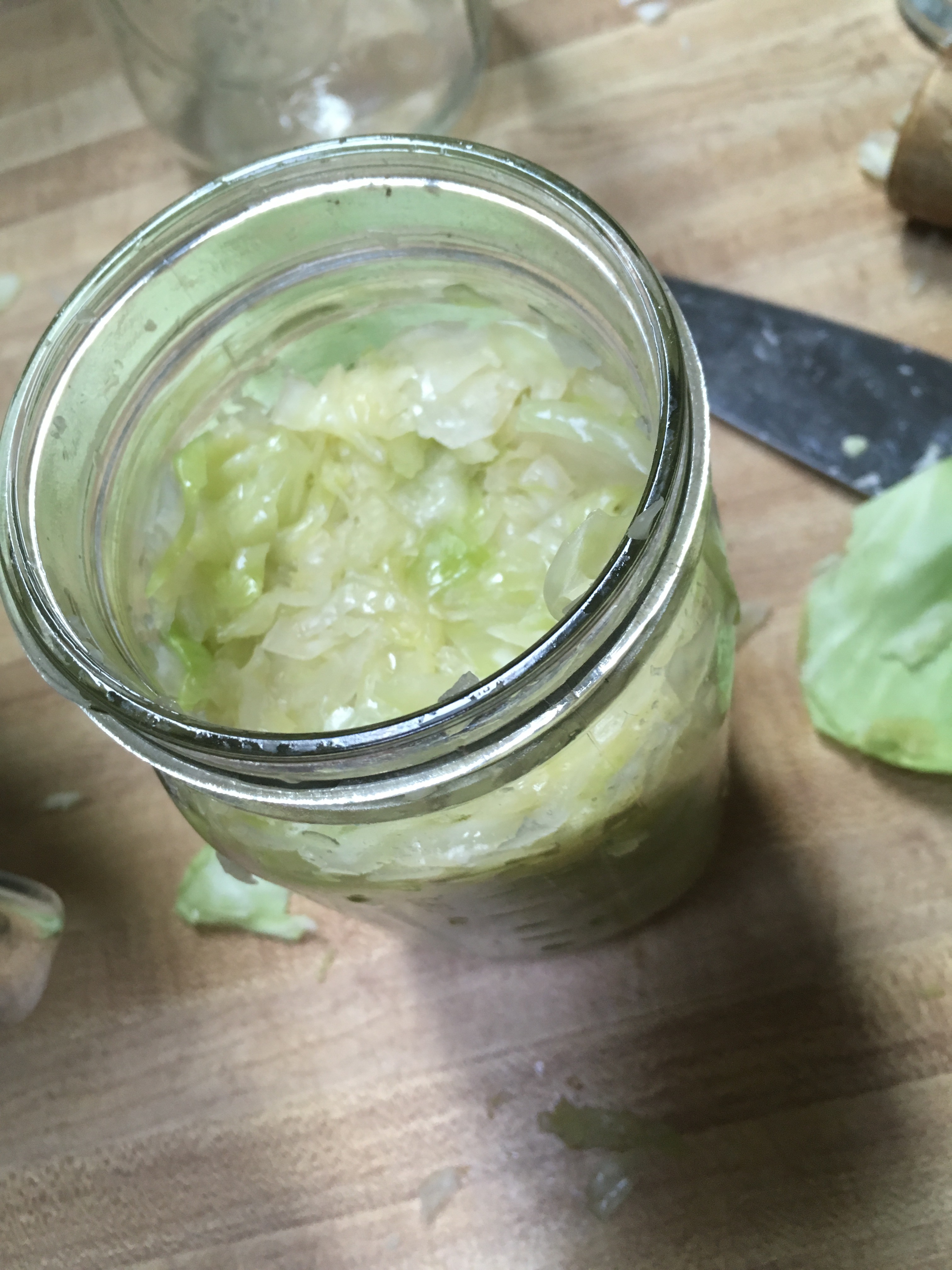
If your house is warm you may check it as early as 2 to 3 weeks, or for cooler temperatures plan one month.
When you think your cabbage is ready taste your cabbage it should have changed from white to nearly translucent. The salty flavor should have diminished and it has been replaced with a bright tangy flavor of lactic acid. Once your kraut is fully fermented remove the pickle pipe and pickle pebble. Seal the jar with the original ring and transfer to fridge.
Let me know how yours turns out!!
Happy Vibes & Healthy Eating!

 Handyman: cvphandyman.com